Phillip Fitzsimmons, University Archivist and Special Collections Librarian, Southwestern Oklahoma State University
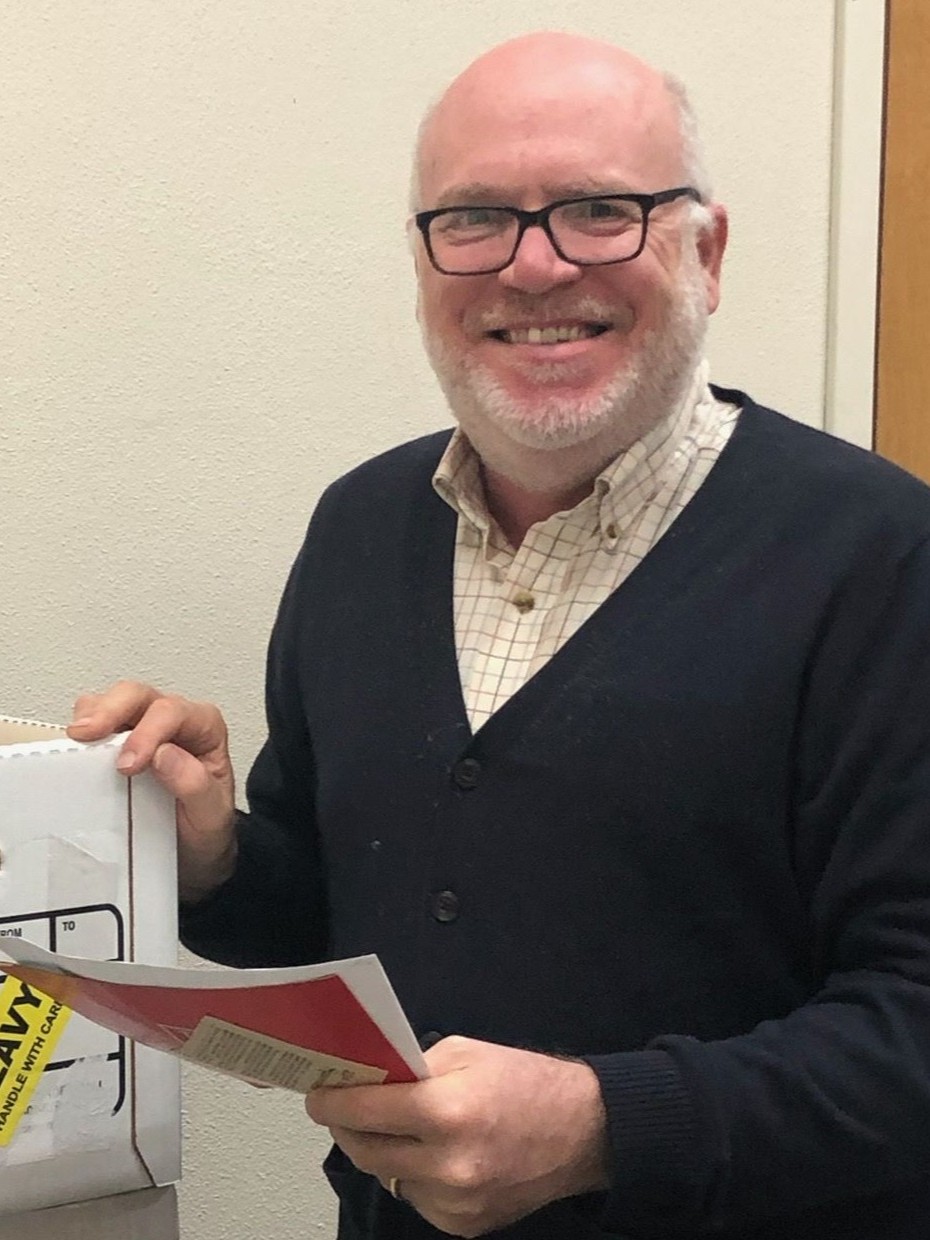
In 2007, as a newly minted librarian fresh from completing his Master of Library and Information Studies at the University of Oklahoma, taking every archiving class that was available at the time, Phillip was given a straightforward assignment: scan or photograph everything in a conference room and make it available online. That simple digitization task became the foundation for something much larger. Mission creep, as he calls it, gradually expanded the scope from preserving static items in the university's small, informal archive to confronting the full challenge of audiovisual preservation when the Thomas P. Stafford collection arrived in 2013, followed by decades of SWOSU athletics recordings. What started as scanning documents evolved into managing film reels, reel-to-reel audio, obsolete video formats, 35mm slides, cassette tapes, and even outdated storage media like floppy disks and word processor cartridges.
What emerges most clearly from Phillip's work is his belief that archival preservation is a technical field requiring strong computer skills and constant technological adaptation, but also a deeply human profession built on customer service. Success, he emphasizes, depends on the connection between reference interview skills to understand what patrons actually need and the skills to find those things in digital. For Phillip, the greatest satisfaction comes from the hunt, finding answers to people's questions and providing them with images, documents, or recordings they can use. It is, he says, both a pleasure and a privilege to work with materials that represent national and institutional history and to make them available to the public.
Today, Phillip's work centers on three major preservation initiatives:
The Stafford collection documents the life and career of astronaut Thomas P. Stafford, who flew on Gemini VI and Gemini IX missions in the 1960s and played a key role in Cold War-era space exploration and international relations. The collection includes photographs, documents, reports, and recordings that represent a pivotal chapter in American space history. Among the most extraordinary items Phillip has encountered are the original reel-to-reel recordings of Stafford communicating with Ground Control during those Gemini missions, irreplaceable primary sources that capture the human voice of early space exploration.
The SWOSU athletics archive preserves film and video recordings of games dating back to the 1970s and 80s, primarily football and basketball. For alumni, these materials are more than historical records; they are a way to revisit a formative part of their lives and reconnect with the university's athletic heritage. Now digitized, the games have become a beloved resource, proof that preservation work serves not only scholarship but also memory, identity, and community.
The Mythopoeic Society archive has quietly become one of the most impactful projects in the collection. The Mythopoeic Society, founded in 1967, is an educational organization dedicated to the study of mythopoeic literature: the works of J.R.R. Tolkien, C.S. Lewis, Charles Williams, and their literary successors. Since 2017, SWOSU's digital archive has made the Society's publications and documents freely available online, generating more than 1.6 million downloads.
Much of this work has been made possible through generous preservation grants from the Oklahoma Historical Society, which provided the resources to digitize film, obsolete video tapes, and reel-to-reel audio that the university lacked the equipment to handle in-house. Phillip has worked with Scene Savers on these grant-funded projects and credits the partnership with enabling SWOSU to place first-rate digital recordings on their institutional repository — materials that simply wouldn't have been accessible otherwise.
If you're pursuing preservation grants or exploring partnerships to digitize collections beyond your in-house capacity, Scene Savers is here to help. From grant application support to project planning and white-glove digitization services, we'd be glad to discuss how we can work together to bring your materials to light.